
By Amin H. Karim MD
JUNE 1987:
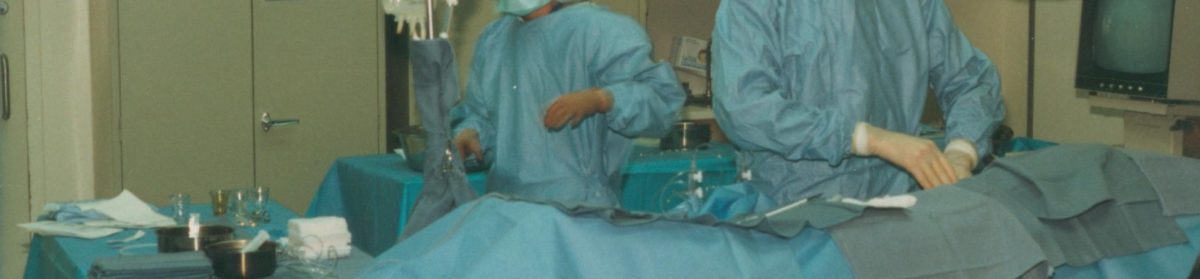
The three year Cardiology fellowship at Baylor College of Medicine, Houston, Texas would soon end as of next month. The third year of fellowship ( as will be described in other pages) was a very busy one being on the TIMI I team along with 3 other fellows Dr. Neil Kleiman (now Director of Cath Lab at Houston Methodist Hospital), Dr. Saul Silver, and Dr. Dennis Goodman. All of us were given the third year as Interventional Fellowship on the condition that we would be the foot soldiers of the TIMI I protocol. (more on other pages)
For now the question was how best to start a private practice, having already decided that Academic job was not for me nor joining a another cardiology group. The decision to stay in Houston, Texas was already made by Shahnaz and me. The task now was to plan, budget and get started in practice. Once the Baylor job ended on June 30, 1987 I better have enough to support the family, have health insurance for family of four and other expenses. As Shahnaz was still studying for ECFMG, there was only one bread winner.
Fist step was to assess the financials condition. Luckily, I had managed to moonlight on the weekends during slower rotations. Moonlighting jobs were available in the precursors of today’s Urgent Care Centers. They were walkin clinics open from 7 AM to 11 PM. One such clinic was the MediClinic with 7 branches in Greater Houston and I would choose the one with the least traffic so that I could take my Braunwald’s Cardiology and study for the Cardiology Boards. Fellow’s salary those days was about $25,000 a year; However, cost of living was low too. Our 2 bed room apartment close to the medical center cost $350 a month. With all that there was about $4000-5000 in savings account that could be the initial cash burn in the new practice as well as living expenses.
The next stage in the strategy was to apply to about 5 neighboring hospitals for privileges. All got approved but some provisional to begin with and no procedure privileges till training was officially complete. These hospitals were:
The Houston Methodist Hospital
The St. Luke’s Episcopal Hospital
The Medical Center Del Oro Hospital
The Women’s Hospital
The Park Plaza Hospital
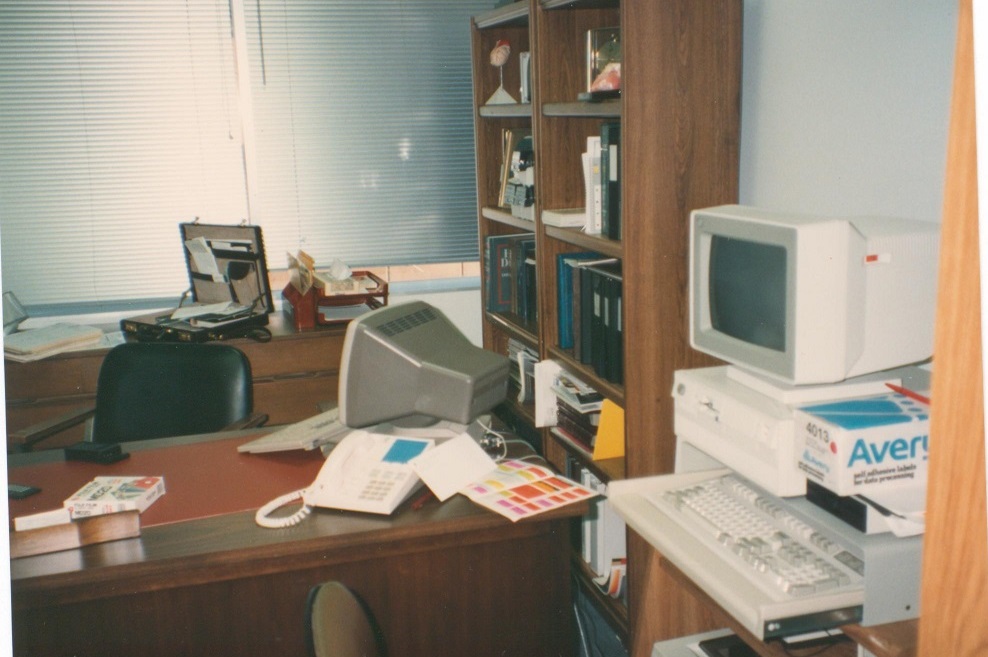
A small 1000 square foot office was located about a mile from the Houston Methodist Hospital on South Main Street in a 5 story building. It was already built out and vacated by another physician. A dermatologist was selling all his used office furniture for $1100; Even bought a used G.E. Ecocardiogram machine from late Dr. William Gaston, a Methodist Cardiologist. I hired a front office girl for $7 an hour. All appointments and payment ledgers were on paper. Later, IMB introduced a nice PC with 20 MB of hard drive which was on sale for a whopping $3500! It came with the DOS operating system; Word or Word Perfect had to be bought separately. A program called RapidFile was used for data base accumulation like addresses and phones. Once the office was set, and come July 1, 1987 I was transformed from a fellow to a consultant or attending physician with my own office! Oh, what a feeling! 🙂
There were other paper formalities like applying for Medicaid, Medicare, Champus, BCBS and as many private insurnace
CALL COVERAGE:
The next step was arranging call coverage which is a requirement for most hospitals and health care systems. I was lucky to have Dr. Mohammed Attar (originally from Syria and Lebanon) who was already in practice and was my attending during fellowship. He too was a solo practitioner and was happy to cross cover. His practice was busy so one advantage was that doing rounds for him on weekends gave me more to bill and occasionally someone would need a emergency procedure.
Dr. Sarma Challa in Methodist Hospital Baytown was very busy and the only cardiologist who actually lived in Baytown. The Chapman group at Methodist Houston ( a 7 member group started by Dr. Don Chapman who was a pioneer of invasive procedures at Houston Methodist) went once a week to Baytown. Baytown did not have coronary surgery program and Dr. Challa would bring all his patients to Houston. I would cover for him during the days he could not make it to Houston ( 30 mile drive along the busy I-10).
Call coverage also promoted networking and establishing relationships with established cardiologists.
But the struggle had just begun. Of all hospitals, the small Del Oro Hospital which was initially established by a group of physicians and surgeons, and later sold to HCA Systems, was the most receptive and helpful, simply because they needed new cardiologists. They had 2 already. I was fully trained in PTCA and one of the cardiologists wanted to do angioplasties but was not trained. I would scrub with him and could bill as an assistant. Later Medicare abolished assistant payments. In any case, I wanted to sharpen my angioplasty skills and would help anyone who needed my help, even at the Methodist Hospital. St. Luke’s was very strict and wanted new fellows to scrub with an established attending for 10 cases (which they would bill) as proctor before the privileges were granted. But privileges at St. Luke’s helped in another way later since Dr. Denton Cooley drew patients from Pakistan and India and some of the well known rich Pakistani industrialists became my patients. Sr. Luks’s also had a good discount rates for cash patients from abroad which Methodist lacked. Dr. Cooley in addition to being a master CV surgeon was also a good businessman and knew well how to market. I remember seeing a St. Luke’s ad in a magazine that you see in the pocket of the seat in front of you in an aircraft!
Once hospital privileges were in place, the next step was how to market oneself for referrals. The bread and butter of a consulting physician of any specialty was referrals from primary care physicians. So one method was to visit them whenever possible with cards and requisition form for test like Echo, stress tests, Holter etc. Referrals from hospital was easier since most surgeons want cardiology clearance and someone to follow on a day to day basis. I got to make friends with many good surgeons and internists. The best way I found to gain the respect of referring docs in the hospitals was to be available and affable. (as one proctor told me). Emergency room doctors were another source of great referrals of unstable angina or acute MI.
The moonlighting of course continued since even when insurances were billed, it took a few months for cheques to start rolling in. I worked at a MacGregor Clinic (now gone) which was a large multispecialty group with PruCare contract (by Prudential Insurance Co). I was paid $25 an hour for supervising treadmill stress tests. I would do 15-20 of them in a 3-4 hours and make reports. Another moonlighting job was at the West Houston Hospital at $20 an hour to take care of Surgical ICU patients and so forth. At least these jobs brought in cash at the end of the month to pay the bills and save some for visit to Pakistan.
Now for furthering the practice, one looked at the map of greater Houston and see where the smaller hospitals were in the periphery with no cardiologist coverage. I found several eg. Alvin Community Hospital (now taken over by Clear Lake Medical Center), The Angleton-Danbury Hospital, (now taken over by UTMB), the Lake Jackson Hospital (also taken over by UTMB), The BayCity Hospital, The Mainland Center Hospital in Texas City; The plan was to visit each of these hospital Emergency Rooms and make friends with the ER docs and let them know you could take acute MI patients. In those days, these hospitals would call Hermann LifeFlight or Methodist Helicopter Service and transfer the acute MI patient with or without first giving TPA. Depending on their condition we could either manage conservatively or take them straight to cath lab for rescue PTCA.
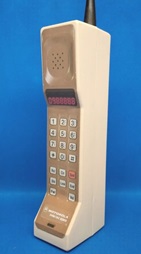
Not that it was easy to cover these distant hospitals. Once you got privileges in these places, you could be called any time of the day or night to see a consult or to read an echo. For example, Mainland Center Hospital was atleast 40 miles away from my home. Sometimes, I would be called to read a study and I would have to drive there. Now, remember we had no mobile phones then and we carried Motorola pagers for nurses to call us. If you got a call while driving on I-45 Freeway, you would have to exit the freeway and find the corner gas station. The area may not be the safest. You carried change in your car to make the phone call. Mercifully, cell phones arrived. I bought a Motorola cell phone the size of a brick which cost $2000. Twenty minutes of talk time per day was $100 per month!
More hospitals were added by me for obtaining privileges including Southeast Memorial Hospital (was not under Hermann yet), the Spring Branch Medical Center (now closed) The Sam Houston Hospital (now closed), The SunBelt Hospital (now closed due to flood destruction), At one time the toral number of hospitals and skilled nursing facilities I had privileges at numbered about 15! You can imagine rounds at these hospitals took time and would last till 11 PM.
The reward, of course, was good. There were no HMOs or PPOs. Medicare paid good for procedures. it took a couple of years ( I had been told it would) to get to a comfort zone of regular office visits, procedures, hospital admissions, consults and other work to get the practice going. Many interesting things were encountered like being approached by a attorney group to take care of a guy involved with a well known case and being a expert witness for him. (more later on that). Attorneys pay well for these cases. Also got in the cross fire of a lawsuit against a urologist when his patient died of bleeding after prostatectomy and I happened to be the cardiologist who had cleared the patient. I was, of course, non suited and later learned that the reason the lawyers get all the docs on the case involved is so they can get free expert witnesses’ when these docs try to defend themselves and inadvertently point fingers at the surgeon! There was much to learn about medico-legal medicine later in practice.
One great satisfaction was that both the Internal Medicine Boards and the Cardiology Boards were cleared in the first attempt. Later in 1999 I cleared the Interventional Cardiology Boards. Mercifully, the first two boards were grand fathered when the rules changed and were valid indefinitely and we would never have to appear in subsequent recertification. The Interventional Board expired in 10 years and I never re took it. Not that anyone cared anyone since no hospital took my interventional privileges away as long as I was actively admitting to the hospital. I still take STEMI calls.

 GlobeMedic