The RCA Challenge

The RCA Challenge
by Dr. Salman Arain

👆🏼This is the case that almost got away. 58 year old man with a failed attempt by the referring MD. He has severe ischemia in the inferolateral region. He does not have LAD or left main disease, so not an upfront CABG candidate.

Tortuous RCA
Tortuous RCA
Here is the attempted intervention. The operator is experienced but does not do CTOs. He used an OTW balloon and some workhorse wires. He stopped because he was unable to cross and the patient started complaining of angina.

But before I do, let me just lay out some initial considerations:

  1. Guide support
  2. Crossing the tortuosity (or tortuosities!)
  3. Prevention of spasm +/- accordion effect
  4. Lesion prep – given the nodular calcium appearance.

I felt that a soft tipped hydrophilic wire was essential to start. Also, up front guide extension…

We used a Luge wire and a 6 Fr GuideLiner. Turns out, that this was the easiest part of the entire procedure. 😳 more to follow 👆🏼This is BAT. Balloon aided tracking. Very helpful for advancing guide extenders over long distances, when the path is relatively open.
There is a 2 mm balloon, partially extending out of the GL tip. It is inflated to 4 atm. Both balloon and GL are advanced together. This is not my attempt. But my commentary is that the operator has good support but his choice of a microcatheter (MC) could have been better. Braided MCs perform better than OTW balloons and unbraided MCs.
Also, the wire should ideally be a highly torquable wire with an appropriate tip. Most workhorse wires don’t have adequate support and/or the appropriate tip – hydrophilic tapered would be ideal.

This is our first attempt – we used multiple wires and tip shapes. Fielder XT, Sion Black, Fighter, and Gladius Mongo.You can see that I am using the Luge as a marker wire. I also have a dual lumen catheter so that the wires don’t interact (with the bonus advantage of support).

Anyway, in the interest of time and not to bore the audience with the drawn out style (which is how I teach!), we decided to take another hi-res view of the lesion. Turns out it is very complex because it comes off in a retroflexed manner, there plaque proximal to it which deflects the MC, and there is a hinge point which makes the lesion even tighter in systole!!! I have deliberately slowed it down here. So, last question. What do you do here? How to solve this twist in the tail?!

What we ended up doing (with luck as much as intention) is creating a ‘biplanar curve’ aka a spiral tip. It bent both downwards and to the side. This allowed us to ‘cork screw’ the wire (Mongo) into the PDA.

But, to put it in perspective, what looks like an obvious solution (now) took years of doing complex cases to achieve. And hundreds if not thousands of cases

Final thoughts. There are three ways to use a balloon to advance a GL.

Anchoring. Best for short distances with few bends. You can do it repeatedly as you go down the vessel.

Inch worming. This is where you deflate the balloon and advance the GL over it. Best for heavily calcified arteries and/or tracking within stents.

  1. BAT. Best for arteries with extreme tortuosity, which are otherwise patent proximately. Or to go down open grafts.

Thank you but we tried all combinations I could think of. With all types of wire tips. Even a Carlino to make a channel and a knuckle. Nothing worked – primarily because the lesion is foreshortened in our initial working view and because the ‘hinge’ at the PDA origin changes the orientation of the opening with every heart beat. A dynamic stenosis! BTW, the wires we used included a Fielder XT, Fighter, Mongo, Sion Black, and a Gaia 2. The bi-planar tip is on the Mongo.
And not with the usual curve added to the pre-shaped tip. Only after we gave it a sideways second curve. You can see it unfold a bit, before we were able to advance it across the stenosis.

Prof. Salman Arain

Permission to reproduce above obtained from Dr. Salman Arain on Nov 27 2023
An Unusual Cardiac Transplant

By Amin H. Karim MD

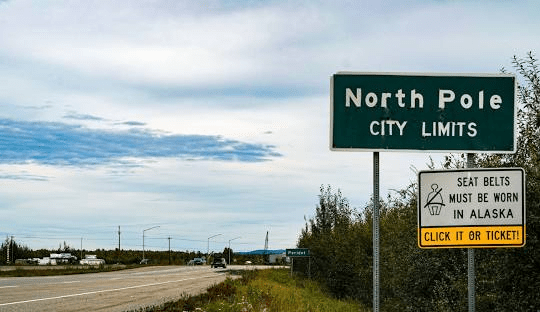
North Pole is a small Alaskan city, near Fairbanks. It’s known for its year-round Christmas decorations, including candy cane–striped street lights. Santa Claus House is a Christmas store with walls covered in children’s letters to Santa and a huge Santa statue outside. Streets have names like Kris Kringle Drive and Mistletoe Lane;

It has a population of about 2300 people who are kind enough to volunteer for parents to send them gifts for children and they in turn mail it back to them via their post office so that they are stamped by the name “North Pole Post Office”.

Now, what has this to do with a Cardiology forum. I will tell you a little story with some history to it.

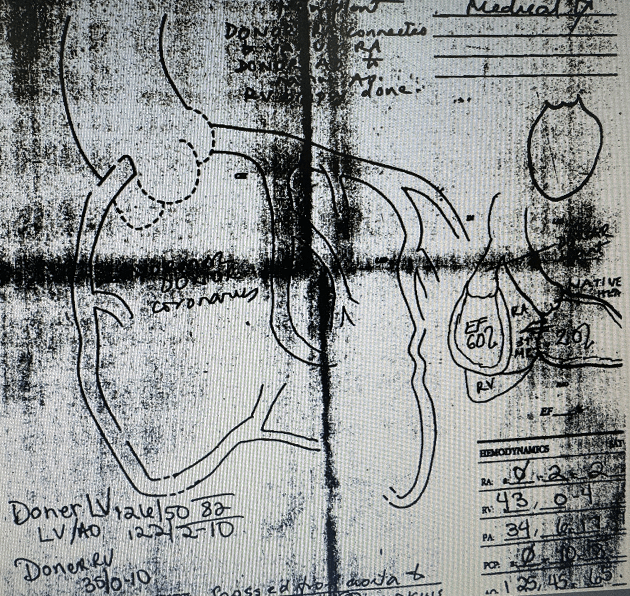
In late 1990s a 65 year old male patient from North Pole Alaska came to me with a complaint of shortness of breath. We found that he had end stage low EF congestive cardiac failure and after the usual workup enlisted him for heart transplant. He was lucky to get one and Dr. Howard Frazier ( who to this day has done the most heart transplants on the Planet) performed a rather atypical heart transplant on him.  Instead of removing the entire front part of the recipient heart and suturing the donor heart over it, he did what was called ” a piggy back transplant” in which he left the native heart alone and connected the donor heart to the aorta and the RA/RV , thus creating a sort of ” Left ventricular Assist Device”. I am not sure what the exact reason for this experiment was but apparently he knew what he was doing  The patient did well and went home and continued to improve for several months off this piggy back heart.  He came back from Alaska and I did a cardiac cath on him as was the protocol along with an endomyocardial biopsy of the donor heart to check for rejection. I got the most strange experience of looking for two sets of coronaries and two left ventriculograms in the same person. The native coronaries were diseased but the donor coronaries were normal angiographically. 

The patient continued to do well and became quite functional and tolerated his anti rejection regimen.   One day, in 1999, he noticed a growth on his year and consulted his primary care doctor in Alaska who told him not to worry about it.  Tragically, it turned out to be a melanoma that quickly spread to his brain and proved fatal.    No wonder, to this day I still have his extended family and friends come to Houston for treatment as they do not trust the doctors there. 

GlobeMedic’s Posting Guidelines

There are many websites, videos and blogs disseminating medical knowledge for learners, be it medical students, residents, fellows and practitioners across the Globe. GlobeMedic will do it a little differently. It will attempt to impart knowledge based on the experience of practicing physicians and surgeons and other professionals, in an informal manner. Not all patient encounters, thoughtful diagnostic workups of patient problems, innovative and skillful procedures and surgeries make it to published case reports. This website will allow the busy practitioner to share his/her experience and procedure details for others to know about.

It is hoped that these informal blogs, demonstrations and discussions will help followers learn a thing or two and either apply in their practice or use the knowledge to answer questions posed in certification exams.

What we do not purport to do: We do not issue Continuing Medical Education Certificates. We do not have any financial gain. This effort is entirely voluntary and in the spirit of sharing knowledge and knowhow for the ultimate benefit of ailing humanity wherever they may be.

HERE ARE SOME GUIDELINES FOR POSTING:
These will be modified from time to time as more faculty is added and we learn from them.