OFFICE GENERAL HELP: HelloRache: Our Healthcare Virtual Assistants can be connected to your current phone system and are able to make/receive calls just like they are sitting in your office. They can schedule patients, confirm appointments, call insurance companies + more. Hellorache.com (recommended by Dr. Shuja Naqvi, Houston)
This section will list major law firms that are known to defend physicians or ones physicians may need in other related matters. This is not a comprehensive list by any means but just a guide as we keep learning from other related fora.
Baker and Bott Jack Stolie andn Roser Lyles and Parker
PRE MANAGED CARE ERA: When I started solo cardiology practice in 1987, not much was heard about Managed Care in general. There was MediCare, Medicaid (Federal program for people below poverty line: patients did not have to pay anything to any provider) and then there was INDEMNITY insurance like BC BS and others which paid the provider for whatever health care service was needed on the basis of usual and customary charges. Many physicians, even in those days did not participate in MediCaid and this situation persists even today. However, there already was PruCare which was a plan of the Prudential Insurance Co and there was only one provider group called the Macgregor Clinic which held their contract. I learned for the first time what an HMO ( Health Management Organization) was; MacGregor had a HMPO contract with them meaning they were paid a fixed amount per patient and they managed the patients in that budget. Another name we heard was NYLCARE by the New York Life Insurance. We heard that they denied tests and were nicknamed DENIAL CARE! 🙂
THE ARRIVAL But the age of Managed Care had arrived. Now we had managed care companies that you had to become a member of to see their patients. That meant more paper work and several page agreements that we rarely read; it had the payment schedule as to how much we would be paid for visits and procedures and they were usually lower than what the INDEMNITY insurance. Most physicians and groups gladly signed up for them; the attraction for them was that they would be listed on the panel of those companies which would therefore give them popularity and a chance to get referrals from PCPs. Little did they realize that in signing up with them they were agreeing to their pre determined rates and could not collect any difference from the patients other than deductibles and co-pays. They would later learn that once signed up and tied to the patient volume offered by these companies, the rates would keep coming down year after year till they would become close to or even lower what MediCare paid! Now if they resigned they would lose all the volume of patients. The larger group had the wherewithal to negotiate better rates but the small groups and solos simply accepted their fate. This situation persists even today and Managed Care companies now rule the roost, requiring pre-authorizations for every procedure done in the clinic. Soon Medicare Advantage Plans would start taking over traditional Medicare from patients with promises of providing them with dental and eye coverage etc. Little do patient realize that they are giving up their freedom to choose the doctor or hospital. Fast forward from early 2000 to the 2023, these plans have grown too big for their breeches now: See the news report from November 27 2023:
Congress Increasing Scrutiny Of Medicare Advantage Plans’ Care Denials, Prior Authorization Politico (11/24, King) reported, “More than 30 million older Americans are enrolled in Medicare Advantage plans, wooed by lower premiums and more benefits than traditional Medicare offers.” However, “a bipartisan group of lawmakers is increasingly concerned that insurance companies are preying on seniors, and, in some cases, denying care that would otherwise be approved by traditional Medicare.” Congressional “scrutiny of these care denials…could have a far greater impact and reshape the rules for one of the most profitable parts of the insurance industry.” Additionally, “many physicians complain that balance has tipped too far in favor of Medicare Advantage plans.”
These and other insurance barriers have resulted over the years to increase the practice costs for the solo physician, while salaries and rents have continued to increase steadily in keeping with inflation. One or two people have to be hired to do ” pre-authorizations” for procedures, sometimes denied till the physician does a “peer to peer” review with their designated physician, often not in the same specialty.
INDEPENDENT PRACTICEORGANIZATIONS: One entity that came to the rescue of solo and small practices was the start of Physician Practice Organizations, established with the help of hospital systems; joining these provided a mechanism to negotiate payments from HMOs and PPOs as well as not having to filling forms for each company separately at times of renewal. I joined the following: Cardiovascular Care Providers St. Luke’s Independent Practice Association Methodist IPA. Gulf Coast IPA Twelve Oaks IPA The last three are closed now. The first two have been very helpful in keeping our contracts.
By Amin H. Karim MD JUNE 1987: The three year Cardiology fellowship at Baylor College of Medicine, Houston, Texas would soon end as of next month. The third year of fellowship ( as will be described in other pages) was a very busy one being on the TIMI I team along with 3 other fellows Dr. Neil Kleiman (now Director of Cath Lab at Houston Methodist Hospital), Dr. Saul Silver, and Dr. Dennis Goodman. All of us were given the third year as Interventional Fellowship on the condition that we would be the foot soldiers of the TIMI I protocol. (more on other pages)
For now the question was how best to start a private practice, having already decided that Academic job was not for me nor joining a another cardiology group. The decision to stay in Houston, Texas was already made by Shahnaz and me. The task now was to plan, budget and get started in practice. Once the Baylor job ended on June 30, 1987 I better have enough to support the family, have health insurance for family of four and other expenses. As Shahnaz was still studying for ECFMG, there was only one bread winner.
Fist step was to assess the financials condition. Luckily, I had managed to moonlight on the weekends during slower rotations. Moonlighting jobs were available in the precursors of today’s Urgent Care Centers. They were walkin clinics open from 7 AM to 11 PM. One such clinic was the MediClinic with 7 branches in Greater Houston and I would choose the one with the least traffic so that I could take my Braunwald’s Cardiology and study for the Cardiology Boards. Fellow’s salary those days was about $25,000 a year; However, cost of living was low too. Our 2 bed room apartment close to the medical center cost $350 a month. With all that there was about $4000-5000 in savings account that could be the initial cash burn in the new practice as well as living expenses.
The next stage in the strategy was to apply to about 5 neighboring hospitals for privileges. All got approved but some provisional to begin with and no procedure privileges till training was officially complete. These hospitals were: The Houston Methodist Hospital The St. Luke’s Episcopal Hospital The Medical Center Del Oro Hospital The Women’s Hospital The Park Plaza Hospital
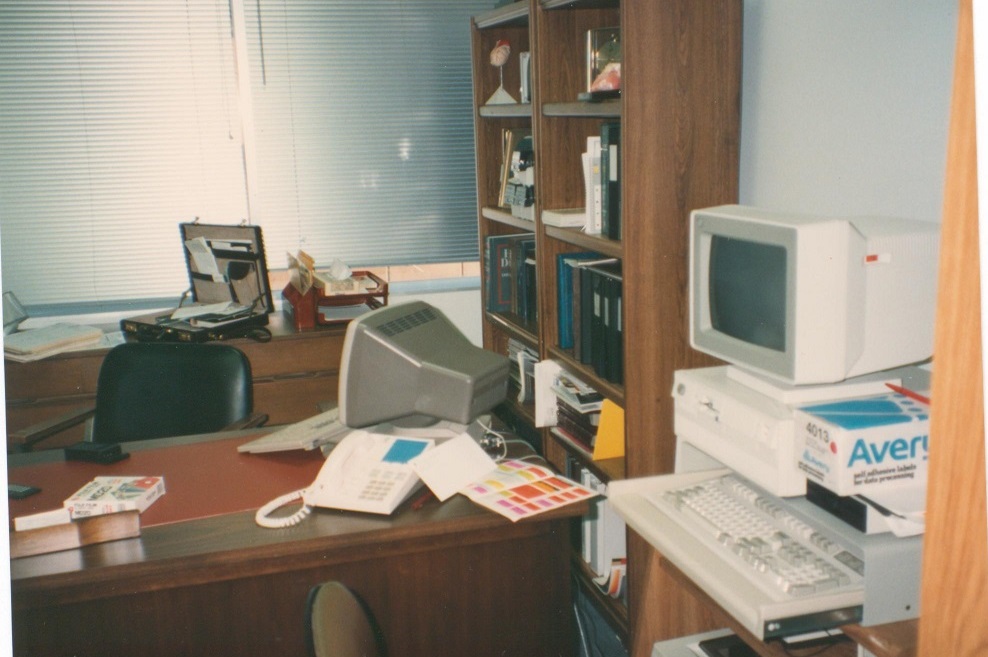
A small 1000 square foot office was located about a mile from the Houston Methodist Hospital on South Main Street in a 5 story building. It was already built out and vacated by another physician. A dermatologist was selling all his used office furniture for $1100; Even bought a used G.E. Ecocardiogram machine from late Dr. William Gaston, a Methodist Cardiologist. I hired a front office girl for $7 an hour. All appointments and payment ledgers were on paper. Later, IMB introduced a nice PC with 20 MB of hard drive which was on sale for a whopping $3500! It came with the DOS operating system; Word or Word Perfect had to be bought separately. A program called RapidFile was used for data base accumulation like addresses and phones. Once the office was set, and come July 1, 1987 I was transformed from a fellow to a consultant or attending physician with my own office! Oh, what a feeling! 🙂 There were other paper formalities like applying for Medicaid, Medicare, Champus, BCBS and as many private insurnace
CALL COVERAGE: The next step was arranging call coverage which is a requirement for most hospitals and health care systems. I was lucky to have Dr. Mohammed Attar (originally from Syria and Lebanon) who was already in practice and was my attending during fellowship. He too was a solo practitioner and was happy to cross cover. His practice was busy so one advantage was that doing rounds for him on weekends gave me more to bill and occasionally someone would need a emergency procedure. Dr. Sarma Challa in Methodist Hospital Baytown was very busy and the only cardiologist who actually lived in Baytown. The Chapman group at Methodist Houston ( a 7 member group started by Dr. Don Chapman who was a pioneer of invasive procedures at Houston Methodist) went once a week to Baytown. Baytown did not have coronary surgery program and Dr. Challa would bring all his patients to Houston. I would cover for him during the days he could not make it to Houston ( 30 mile drive along the busy I-10). Call coverage also promoted networking and establishing relationships with established cardiologists.
But the struggle had just begun. Of all hospitals, the small Del Oro Hospital which was initially established by a group of physicians and surgeons, and later sold to HCA Systems, was the most receptive and helpful, simply because they needed new cardiologists. They had 2 already. I was fully trained in PTCA and one of the cardiologists wanted to do angioplasties but was not trained. I would scrub with him and could bill as an assistant. Later Medicare abolished assistant payments. In any case, I wanted to sharpen my angioplasty skills and would help anyone who needed my help, even at the Methodist Hospital. St. Luke’s was very strict and wanted new fellows to scrub with an established attending for 10 cases (which they would bill) as proctor before the privileges were granted. But privileges at St. Luke’s helped in another way later since Dr. Denton Cooley drew patients from Pakistan and India and some of the well known rich Pakistani industrialists became my patients. Sr. Luks’s also had a good discount rates for cash patients from abroad which Methodist lacked. Dr. Cooley in addition to being a master CV surgeon was also a good businessman and knew well how to market. I remember seeing a St. Luke’s ad in a magazine that you see in the pocket of the seat in front of you in an aircraft!
Once hospital privileges were in place, the next step was how to market oneself for referrals. The bread and butter of a consulting physician of any specialty was referrals from primary care physicians. So one method was to visit them whenever possible with cards and requisition form for test like Echo, stress tests, Holter etc. Referrals from hospital was easier since most surgeons want cardiology clearance and someone to follow on a day to day basis. I got to make friends with many good surgeons and internists. The best way I found to gain the respect of referring docs in the hospitals was to be available and affable. (as one proctor told me). Emergency room doctors were another source of great referrals of unstable angina or acute MI.
The moonlighting of course continued since even when insurances were billed, it took a few months for cheques to start rolling in. I worked at a MacGregor Clinic (now gone) which was a large multispecialty group with PruCare contract (by Prudential Insurance Co). I was paid $25 an hour for supervising treadmill stress tests. I would do 15-20 of them in a 3-4 hours and make reports. Another moonlighting job was at the West Houston Hospital at $20 an hour to take care of Surgical ICU patients and so forth. At least these jobs brought in cash at the end of the month to pay the bills and save some for visit to Pakistan.
Now for furthering the practice, one looked at the map of greater Houston and see where the smaller hospitals were in the periphery with no cardiologist coverage. I found several eg. Alvin Community Hospital (now taken over by Clear Lake Medical Center), The Angleton-Danbury Hospital, (now taken over by UTMB), the Lake Jackson Hospital (also taken over by UTMB), The BayCity Hospital, The Mainland Center Hospital in Texas City; The plan was to visit each of these hospital Emergency Rooms and make friends with the ER docs and let them know you could take acute MI patients. In those days, these hospitals would call Hermann LifeFlight or Methodist Helicopter Service and transfer the acute MI patient with or without first giving TPA. Depending on their condition we could either manage conservatively or take them straight to cath lab for rescue PTCA.
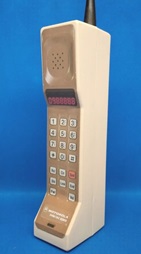
Not that it was easy to cover these distant hospitals. Once you got privileges in these places, you could be called any time of the day or night to see a consult or to read an echo. For example, Mainland Center Hospital was atleast 40 miles away from my home. Sometimes, I would be called to read a study and I would have to drive there. Now, remember we had no mobile phones then and we carried Motorola pagers for nurses to call us. If you got a call while driving on I-45 Freeway, you would have to exit the freeway and find the corner gas station. The area may not be the safest. You carried change in your car to make the phone call. Mercifully, cell phones arrived. I bought a Motorola cell phone the size of a brick which cost $2000. Twenty minutes of talk time per day was $100 per month!
More hospitals were added by me for obtaining privileges including Southeast Memorial Hospital (was not under Hermann yet), the Spring Branch Medical Center (now closed) The Sam Houston Hospital (now closed), The SunBelt Hospital (now closed due to flood destruction), At one time the toral number of hospitals and skilled nursing facilities I had privileges at numbered about 15! You can imagine rounds at these hospitals took time and would last till 11 PM.
The reward, of course, was good. There were no HMOs or PPOs. Medicare paid good for procedures. it took a couple of years ( I had been told it would) to get to a comfort zone of regular office visits, procedures, hospital admissions, consults and other work to get the practice going. Many interesting things were encountered like being approached by a attorney group to take care of a guy involved with a well known case and being a expert witness for him. (more later on that). Attorneys pay well for these cases. Also got in the cross fire of a lawsuit against a urologist when his patient died of bleeding after prostatectomy and I happened to be the cardiologist who had cleared the patient. I was, of course, non suited and later learned that the reason the lawyers get all the docs on the case involved is so they can get free expert witnesses’ when these docs try to defend themselves and inadvertently point fingers at the surgeon! There was much to learn about medico-legal medicine later in practice.
One great satisfaction was that both the Internal Medicine Boards and the Cardiology Boards were cleared in the first attempt. Later in 1999 I cleared the Interventional Cardiology Boards. Mercifully, the first two boards were grand fathered when the rules changed and were valid indefinitely and we would never have to appear in subsequent recertification. The Interventional Board expired in 10 years and I never re took it. Not that anyone cared anyone since no hospital took my interventional privileges away as long as I was actively admitting to the hospital. I still take STEMI calls.
In 1981-84 I was a resident at the Sinai Hospital of Baltimore, Maryland. Dr. Joseph Solomon was a cardiologist and the CCU attending and the only invasive cardiologist in the hospital; he did only left and right heart catheterizations. Patients needing coronary intervention were sent to either Johns Hopkins downtown Baltimore or to Minnesota to Dr. Dudley Johnson. I took care of a patient with heart failure symptoms which turned out to be constrictive pericarditis. The case was reported and published in the American Journal of Medicine in 1985. Amin H. Karim MD
By Amin H. Karim MD In 1993, I worked at a small hospital called the Del Oro Hospital, which was established by a group of physicians in the Texas Medical Center who wanted to create a hospital outside the domain of the major players of the Texas Medical Center. It was a 100 bed hospital located on Greenbriar Avenue next to the Reliant Stadium (now called NRG Stadium). The hospital was later sold to Hospital Corporation of America (HCA) and later to Columbia Hospital and then back to HCA when Columbia went bankrupt. The Texas Women’s Hospital is behind this hospital. The hospital closed in 1995 and was torn down. It is now replaced by an extension of the Women’s Hospital. Late Dr. Pedro Rubio was a cardiovascular surgeon trained by late Dr. Michael E. DeBakey at Baylor College of Medicine. He was the only CV surgeon at De Oro for a long time. He had an freak accident at home when he tripped and injured his elbow; he retired thereafter and later passed away (may he Rest in Peace). Dr. Rubio and I saw a case which is described in this paper and turned out to be interesting and unique enough for us to report it in literature. (Amin H. Karim November 24 2023)
An article published in the Texas Heart Institute Journal in 1988 after the TIMI Trial 1 had been completed and the standard of care for acute myocardial infarction was thrombolysis with Tissue Plasminogen Activator. (TPA) made by Genentec. We wrote this article as fellows of the Baylor College of Medicine, Houston, Texas. (AHK November 24 2023)
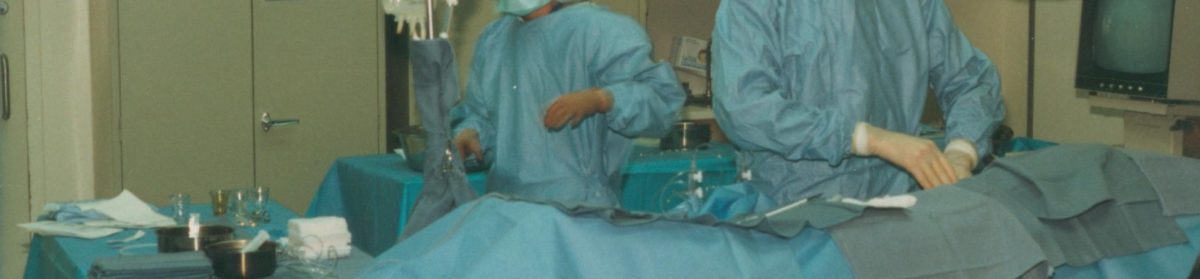
It was a late autumn night with typical torrential Houston rain, and I was on call for the ST eleva‐ tion myocardial infarction (STEMI) team, which consists of an interventional cardiologist, a traineefellow, a cath lab registered nurse, and cath lab and radiology technicians. It was 3:30 AM and Iwas deep in sleep, only vaguely aware of my beeper going off and quite unaware of the storm out‐ side. The emergency room (ER) physician wanted my opinion on an electrocardiogram (EKG) of apatient with chest pain to see if it qualified as an acute myocardial infarction. He texted the EKGimage to my mobile phone, and I staggered to the closet to turn on the light and read it. I relayedthat I was not impressed at the degree of ST elevation, he concurred, and I sank back into bed. Awhile later, the ER physician called again with a repeat EKG, this time with more ST elevation andan elevated serum troponin level. Hastily, I slipped into my scrubs and quietly tiptoed to avoidwaking my wife. Rain pelted my car as I drove through the neighborhood in utter darkness. Within a few blocks, Inoticed that the water level had risen but couldn’t gauge how high—simply because there were noother cars or street signs for comparison. I slowly slogged through, only to find my car splutteringbefore eventually stopping completely. It restarted just long enough to hobble to a slightly lessflooded spot on the main road, where it completely died, the dreaded engine warning light flash‐ ing on the dashboard. I started to sweat as the gravity of the situation took hold. The patient was probably in the cardiaccath lab by now, and the cardiologists’ guiding principle, “time is muscle,” ran through my head:The longer it took to open the vessel, the more myocardial damage. I looked around and the streetwas desolate. The hospital was a good 3 miles away, and the road ahead looked flooded. Walkingwould mean wading through the water with its attendant dangers of electrical wires and the like. Wade back to my house? I thought. Only a few blocks away, this seemed like the logical option. Call the ER physician and tell him to treat the patient with a thrombolytic drug? Since thrombolytictherapy is the second-best way to treat an acute myocardial infarction, this was another sound op‐ tion, albeit one that does not always work. Call 911? And tell them what? Suddenly, the solution popped into my head: Uber! Although I had never used it, the app was onmy iPhone. I signed in, entered my location and the hospital address, and sure enough there was adriver on the freeway just minutes away. The cost, of course, would be double. I watched the appas it traced the car coming towards me. After getting in, I directed the driver through a route thatis usually not flooded. Remarkably, I made it to the cath lab before the rest of the team, and wewere able to perform the procedure under the mandatory 90-minute door-to-balloon time. Thepatient did well, and as I breathed a sigh of relief, I remembered that there was still one morething to tackle. For the second time that night, I called Uber. The driver dropped me off at my car, where I thencalled a wrecker. My car had sucked up water and blown a hole in the engine, but the wreckerdriver refused to give me a tow until I gave him cash, which required another trip to the ATM ma‐ chine. After a month of haggling with the car dealership and insurance company, I finally had theengine replaced at a cost of several thousand dollars, and I was back in business. While in the midst of this ordeal, I felt some regret at being an interventional cardiologist with itsnecessary obligations to care for patients in acute situations. Yet after the procedure, I felt gratefulfor being able to use my skills to save heart muscle and, potentially, a life. Still, I resolved to resignfrom the STEMI call schedule the following year, feeling too old (or maybe too tired) for all thisexcitement. The next year, however, I found myself signing up for twice as many calls. I guess for some die-hard physicians, chronic workalcholism and patient dedication are incurable conditions!
PUBLISHED IN THE METHODIST DEBAKEY CARDIOVASCULAR JOURNAL Methodist Debakey Cardiovasc J. 2019 Apr-Jun; 15(2): e1. doi: 10.14797/mdcj-15-2-e1 PMCID: PMC6668749 PMID: 31384387
Here are some groups on FaceBook which I have started from time to time and are still going strong. You are cordially invited to join them if you have interest or if you satisfy the criteria, as some of them are restricted to particular alumni. Most of the groups are on auto pilot and need little maintenance.
A) FACEBOOK GROUPS:
a) GlobeMedic This comprises physicians and health care professionals of Pakistan origin settled all over the Globe.
b) HoustonDocs This is restricted to health care professionals of Pakistan origin living in the Greater Houston area.
c) LikeMind for Muslims living in North America
d) Pak Americans open to all Pakistanis in North America
e) GlobeCardio for cardiologists of Pakistani origin anywhere.
f) Karachi Past and Present for anyone who loves Karachi.
g) HeartCirclers for health professionals in the Texas Medical Center of Houston.
h) DowList for faculty, alumni and students of Dow University of Health Sciences.
i) StPatsKarachi for alumni of St. Patrick’s High School, Karachi.
j) RealBucks for financial discussions in USA
h)RealtyStars for real estate interchange in USA.
i) HomeLand Politics for US related political discussions.
B) EMAIL GROUPS
a) GlobeMedic@yahoogroups.com for Pakistan Descent physicians

 GlobeMedic