
By Dr. Shifa Younus
Nishtar Medical College, Multan, Pakistan.
Amin H. Karim MD
Case Presentation:
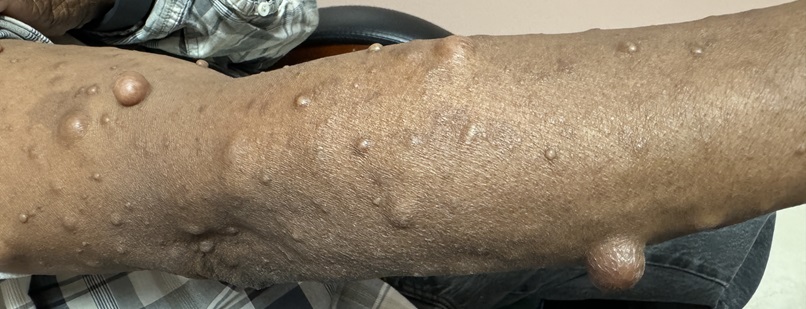
A 65-year-old patient, presents in the office with multiple raised lesions all over his body more so on face and extremities. The patient has had these lesions since childhood. He had a few lesions in the beginning, but these progressively increased in number with time. The Patient complains of high blood pressure readings for one year. There is no history of neurological tumors, intellectual disability, or renal involvement.
Family History: The Patient has a family history of similar lesions in his son and grandson. Both have these lesions with associated symptoms.
Physical Examination:
Extremity Examination: There are multiple lesions which are raised, mobile, and painless with no associated ulcers or change in coloration of the surrounding skin.
Diagnosis:
Based on the symptoms and history, Mr. Mccray was diagnosed with Neurofibromatosis type 1 or Von Recklinghausen’ disease.
Neurofibromatosis type 1 or Von Recklinghausen’s Disease:
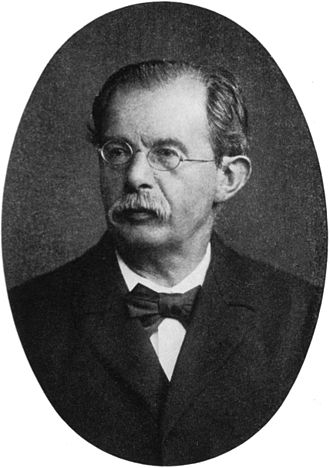
Neurofibromatosis type 1 (NF-1) was formerly known as Von Recklinghausen’s disease after the German pathologist, Friedrich Daniel von Recklinghausen (1822-1910). He was the student of a famous pathologist Rudolph Virchow in University of Berlin. and served as the professor of pathology in various universities. He is best known for his description of three disorders: multiple neurofibromatosis, osteitis fibrosa cystica, and hemochromatosis.[1]
NF-1 is one of the most common neurocutaneous genetic disorders with autosomal pattern of inheritance. It accounts for 1 out of 3000 live births. It is caused by the mutations in NF-1 gene, present on chromosome 17, which encodes a cytoplasmic protein, neurofibromin present in neurons, leukocytes, oligodendrocytes, and Schwann cells. [2]
NF-1 is an age specific disease which becomes apparent during infancy, but it can also appear in adulthood due to hormonal changes. The severity of the disease varies from person to person. However, about 60% of the patients present with mild disease with no effect on their daily life. Neurofibromas, the most common presentation related to NF-1, are the peripheral nerve sheath tumors arising from Schwann cells and fibroblasts. [3]
NF-1 comprises of multiple manifestations ranging from cutaneous lesions to serious neurological and systemic manifestations which include:
Cutaneous manifestations:
- Café au lait spots
- Inguinal or axillary freckling (Crowe’s sign)
- Neurofibromas; cutaneous or plexiform
Ocular manifestations:
Optic glioma
Lisch nodules, brown pigmented hamartomatous nodule affecting iris.
Musculoskeletal manifestations:
Kyphosis
Scoliosis
Macrocephaly
Sphenoid dysplasia
Craniofacial manifestations:
Orbital dysplasia
Intraosseous neurofibroma of maxilla and mandible
Pheochromocytoma.
Attention deficit hyperkinetic disorder.
NF-1 can lead to some serious complications including bone tumors and peripheral nerve damage that may also lead to vision loss. Some neurofibroma may rarely degenerate into malignant tumors. However, early diagnosis and treatment plays an important role in improving the prognosis. The National Institute of Health Consensus Development Conference in 1988 put forth a diagnostic criterion for NF-1. If the patient has two or more of the following:
- Six or more café au lait macules
- Two or more neurofibromas of any type or one plexiform neurofibroma
- Freckling in the axillary or inguinal regions
- Optic glioma
- Two or more iris Lisch nodules
- Distinctive osseous lesion such as sphenoid dysplasia
- Family history of the first-degree relative with neurofibromatosis. [4]
Other diagnostic techniques include:
- Slit-lamp examination may be performed on children to look for Lisch nodules.
- T2 weighted MRI of the brain and spine which may reveal hyperintense lesions due to aberrant myelination or gliosis of neurons. [5]
- Biopsy of the neurofibromas which may reveal non-encapsulated tumor composed of fascicles of slender, spindle-shaped cells.
- Prenatal diagnosis of NF-1 can be made by genetic testing.
The management of neurofibromatosis is done by a multidisciplinary team which includes dermatologists, neurologists, oncologists, pediatricians, and genetic counselors. Café au lait spots and cutaneous neurofibromas are particularly benign and do not require treatment. However, symptomatic lesions or ones with malignant potential may require surgical excision but their recurrence is very common. [6] Apart from the mainstay treatment by surgery there are certain medical treatments that target at the molecular level and inhibit the pathway involved in pathophysiology of neurofibromas. These include selumetinib, mirdametinib, binimetinib which have proven to be helpful in decreasing the overall volume of neurofibromas and providing symptomatic relief. NF-1 has a considerable impact on general quality of life (QoL) of the patients due to it dermatological manifestations. Therefore, psychosocial support is of immense importance in such patients and cannot be neglected. [7]
1.Britannica, T. Editors of Encyclopaedia (2023, November 28). Friedrich Daniel von Recklinghausen. Encyclopedia Britannica. https://www.britannica.com/biography/Friedrich-Daniel-von-Recklinghausen
2.Ghalayani P, Saberi Z, Sardari F. Neurofibromatosis type I (von Recklinghausen’s disease): A family case report and literature review. Dent Res J (Isfahan). 2012;9(4):483-488.
3.Nallanchakrava S, Mallela MK, Jeenepalli VSK, Niharika HM. A rare case report of neurofibromatosis type 1 in a 12-year-old child: A 15-month follow-up. J Oral Maxillofac Pathol. 2020;24(Suppl 1):S106-S109. doi:10.4103/jomfp.JOMFP_35_20
4. Ferner RE, Huson SM, Thomas N, et al. Guidelines for the diagnosis and management of individuals with neurofibromatosis 1. J Med Genet. 2007;44(2):81-88. doi:10.1136/jmg.2006.045906
5. Ferner RE, Huson SM, Thomas N, et al. Guidelines for the diagnosis and management of individuals with neurofibromatosis 1. J Med Genet. 2007;44(2):81-88. doi:10.1136/jmg.2006.045906
6. Taylor LA, Lewis VL Jr. Neurofibromatosis Type 1: Review of Cutaneous and Subcutaneous Tumor Treatment on Quality of Life. Plast Reconstr Surg Glob Open. 2019;7(1):e1982. Published 2019 Jan 18. doi:10.1097/GOX.0000000000001982
7. Taylor LA, Lewis VL Jr. Neurofibromatosis Type 1: Review of Cutaneous and Subcutaneous Tumor Treatment on Quality of Life. Plast Reconstr Surg Glob Open. 2019;7(1):e1982. Published 2019 Jan 18.
 GlobeMedic